
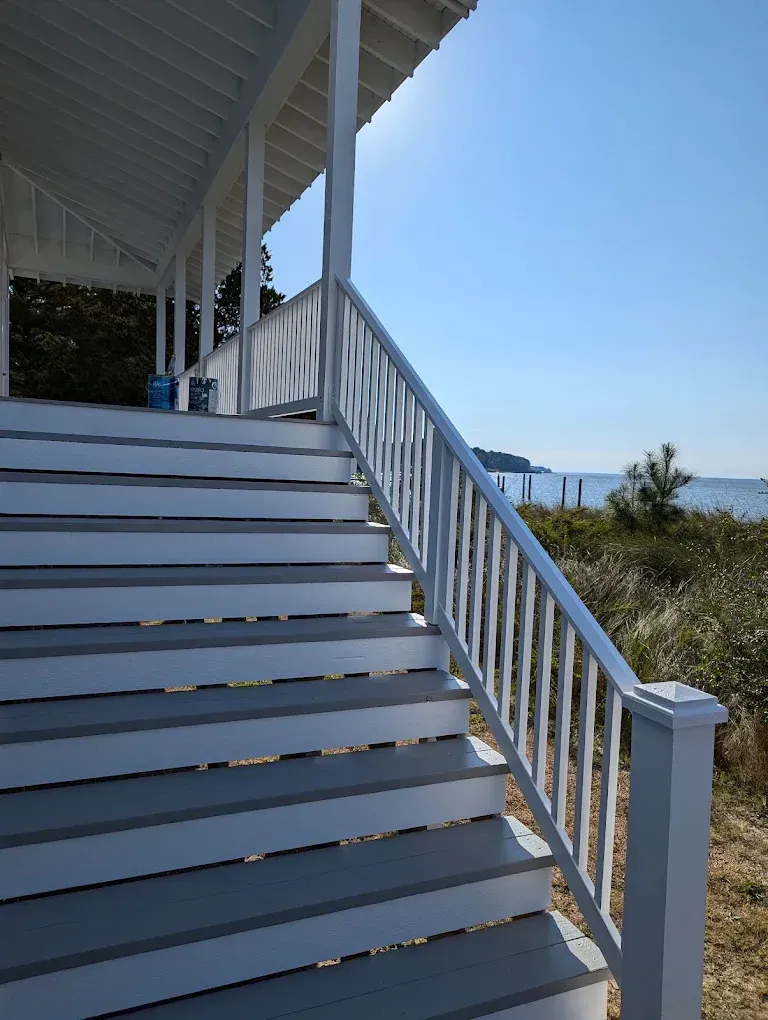
Decks Built to Handle Salt Air and Humidity
Deck Repairs and Building in Newport News for waterfront properties exposed to year-round moisture and corrosion
Brandon's Painting & Handyman Services builds and repairs residential decks across Hampton Roads, using moisture barriers under joists and stainless-steel fasteners designed to resist the salt air that accelerates wood rot and hardware failure throughout the Tidewater region. Properties along the James River waterfront, in Poquoson, and throughout Riverside face humidity levels that cause untreated lumber to warp and standard fasteners to corrode within seasons. Proper deck construction accounts for seasonal expansion by spacing gaps that accommodate wood movement during humid summers and drier winter months.
Deck work in this service area addresses frame rot from trapped moisture, failing fasteners weakened by salt exposure, and boards that cup or split when drainage underneath the structure fails to move water away from joists. Pressure-treated or composite frames sit on moisture barriers that prevent ground contact and reduce fungal growth, while fastener choice directly affects how long railings and support beams remain structurally sound under wind loads common to waterfront locations.
Schedule a property evaluation to assess frame condition and identify moisture-related damage before planning repairs or new construction.
What Proper Deck Work Requires
Frame construction begins with joist spacing appropriate for the decking material and includes moisture barriers placed under joists where they meet support posts, preventing the capillary action that pulls ground moisture into lumber grain. Stainless-steel fasteners cost more than galvanized hardware but do not develop the rust stains and structural weakness that appear within two to three years on decks near saltwater, where airborne salinity reaches levels high enough to corrode standard metal. Seasonal gap spacing between boards allows for the expansion that occurs when relative humidity climbs above eighty percent during summer months, preventing the board buckling that happens when wood swells against fixed edges.
Once deck work is complete, you will notice that water drains off the surface without pooling in low spots, railings remain rigid without the lateral movement that signals loosened fasteners, and boards sit level across the frame without the cupping that develops when moisture enters through untreated cut ends. Brandon's Painting & Handyman Services finishes edges and applies sealant to cut ends before installation, reducing the moisture intrusion that leads to early replacement cycles.
Deck repairs often involve replacing sections of decking where fasteners have pulled through softened wood, reinforcing support beams that show deflection under load, and re-securing railings that no longer meet the force requirements intended to prevent collapse during heavy leaning or impact. Full rebuilds allow for design changes that improve drainage slope and adjust the framing layout to reduce future maintenance intervals..
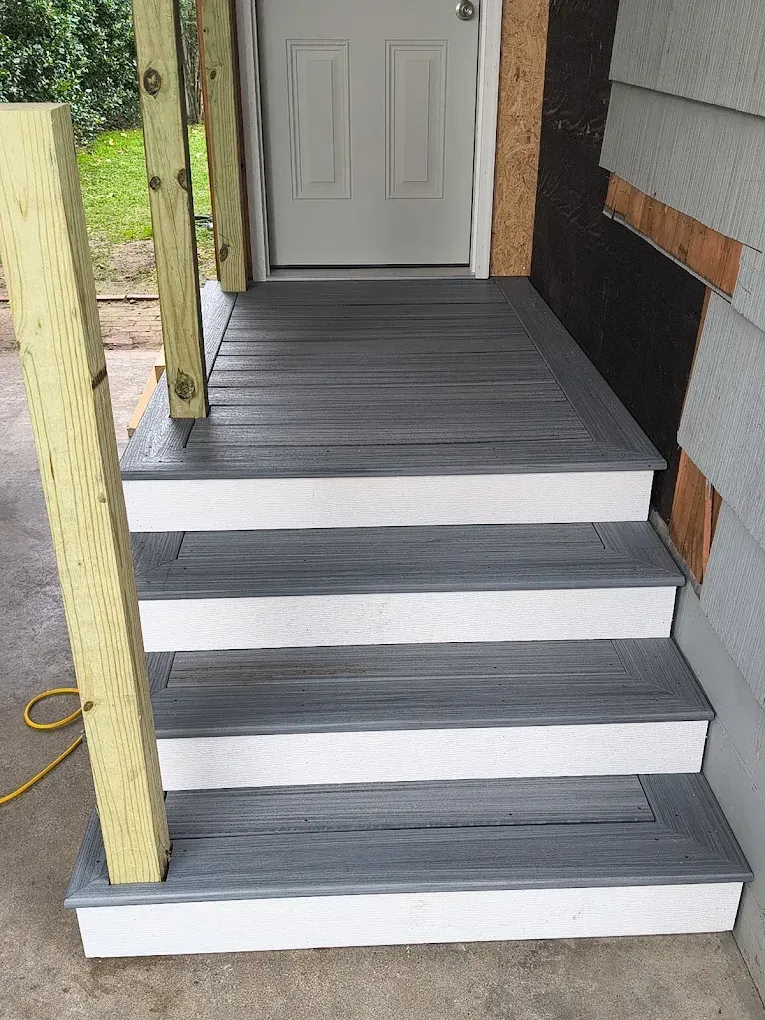
Questions Before Starting Your Deck Project
Deck projects in waterfront and high-humidity areas raise specific questions about material durability and construction methods that affect long-term performance.
What materials work best for decks in Newport News and surrounding waterfront areas?
Pressure-treated lumber with a minimum retention level for ground contact and composite decking both perform well when paired with stainless-steel fasteners and moisture barriers, though composite resists salt-air degradation longer than wood alternatives without requiring annual sealing.
How does seasonal expansion affect deck construction in this region?
Humid summers cause wood to swell, so gap spacing between boards must account for expansion rates specific to the decking material, preventing the buckling that occurs when boards press against each other as moisture content increases.
What causes deck fasteners to fail faster near the water?
Salt air accelerates oxidation on galvanized and standard steel fasteners, producing rust that weakens connection points and stains decking surfaces, which is why stainless-steel hardware is specified for properties within a few miles of the James River or Chesapeake Bay.
When should I repair a deck versus rebuild it entirely?
If more than thirty percent of the decking shows rot, if joists deflect visibly under weight, or if support posts no longer sit plumb, a full rebuild typically costs less over five years than repeated section repairs that leave underlying frame issues unaddressed.
What does deck work include beyond replacing boards?
Full-scope projects involve frame inspection, joist reinforcement or replacement, moisture barrier installation, railing upgrades to current load standards, and sealing all cut ends to prevent moisture wicking into lumber grain.
Brandon's Painting & Handyman Services applies salt-air and humidity-aware construction methods across Tidewater properties, preventing the premature decay common to decks built without attention to local environmental conditions. Request an on-site consultation to review your current deck structure and discuss material options suited to waterfront exposure.