
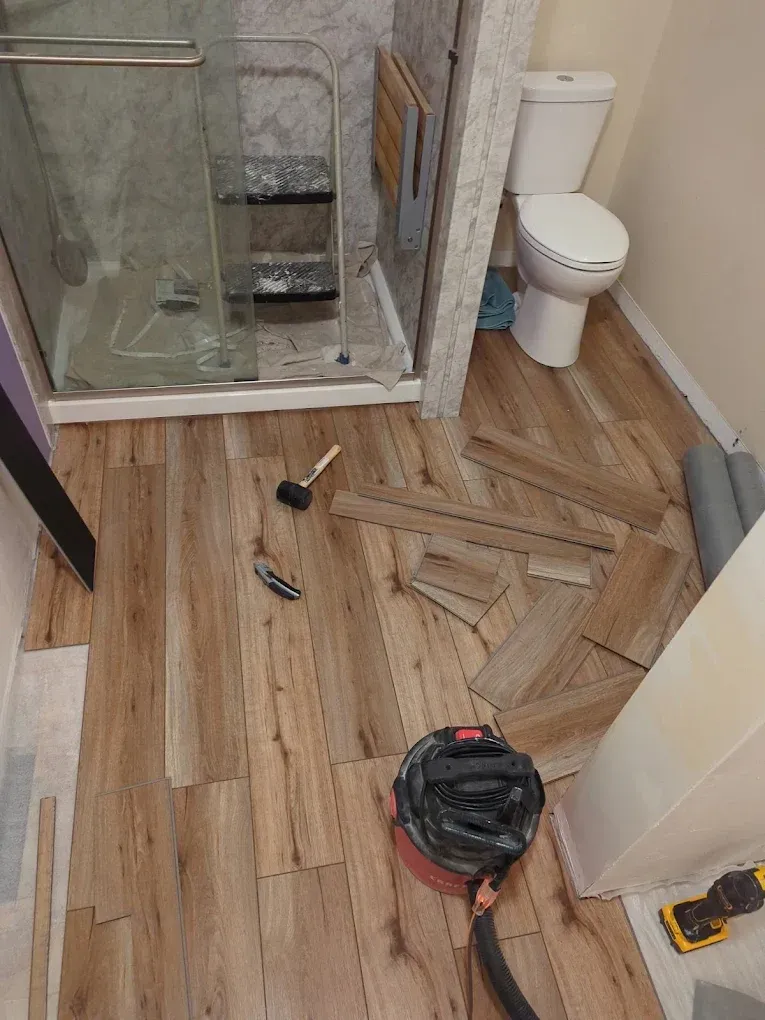
Hard Surface Flooring That Stays Level
Flooring Services in Newport News for wood, laminate, and tile installation in homes facing humidity swings and moisture intrusion from Tidewater climate
Humidity swings and salt air in Lee Hall, Warwick, and along the I-64 corridor require moisture-resistant subfloor prep that most flooring installers skip, and waterfront homes need sealed underlayment to prevent the cupping and gapping that appears within months of installation. Brandon's Painting & Handyman Services installs hard flooring—wood, laminate, and tile—for kitchens, bathrooms, and living spaces using moisture barriers and acclimation protocols calibrated for coastal Virginia's seasonal expansion cycles. The service excludes carpet because the focus is on luxury flooring materials like tile and LVT that withstand the region's humidity without trapping allergens or degrading from moisture exposure.
The installation includes moisture barrier placement over substrate, acclimation periods that allow materials to adjust to indoor humidity before installation, and substrate grading to eliminate the dips and high spots that cause tiles to crack or laminate planks to buckle. Most flooring failures happen because materials weren't acclimated, substrates weren't flat within industry tolerance, or moisture barriers weren't extended past wall edges.
Schedule a flooring consultation to assess your substrate condition, moisture levels, and material options based on room use and exposure..
What Changes After Flooring Installation Completes
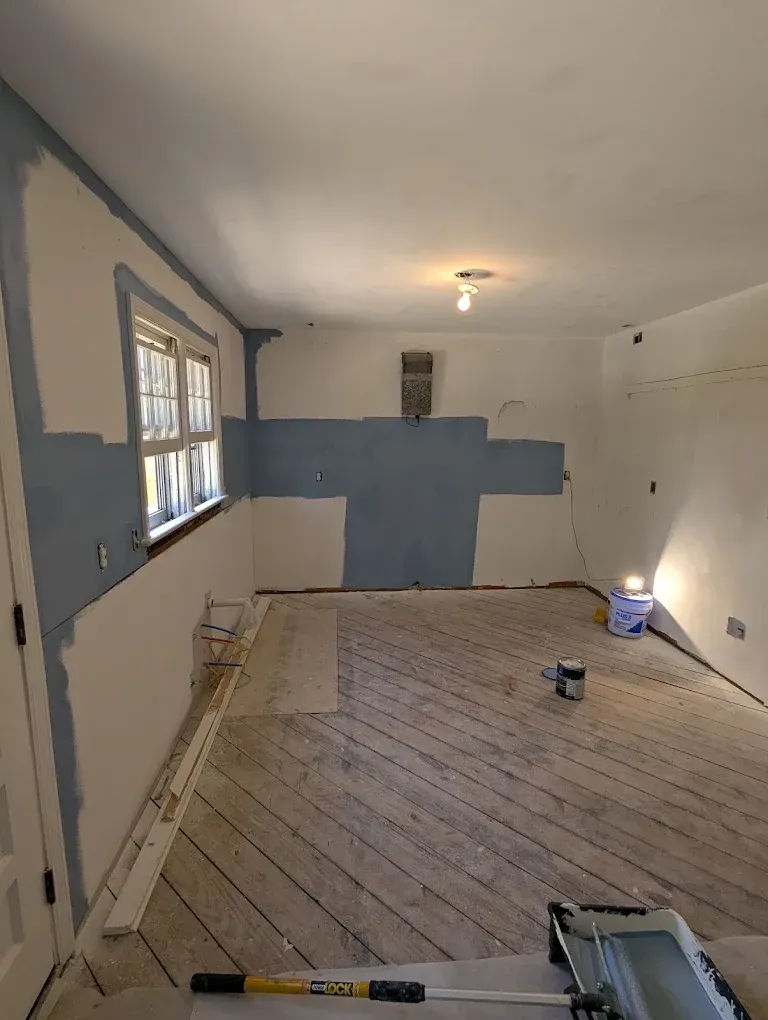
Flooring installation in Hampton Roads involves more than laying materials—it requires substrate inspection to identify soft spots or deflection that telegraphs through finish flooring, moisture testing to confirm subfloors are dry enough for installation, and transition planning so that height changes between rooms don't create trip hazards. Substrates are leveled with self-leveling compound or shimmed plywood depending on severity, moisture barriers are taped at seams to prevent ground moisture from wicking up, and materials are acclimated for at least 48 hours in the installation environment before cutting begins.
Once installation completes, you'll notice that flooring feels solid underfoot without the hollow sound that indicates voids beneath, tile grout lines remain uniform without lippage where adjacent tiles sit at different heights, and wood or laminate planks stay tight without the seasonal gapping that happens when acclimation was skipped. Transitions between rooms align flush without vertical lips, and baseboards sit tight against flooring edges without gaps that expose underlayment.
Brandon's Painting & Handyman Services coordinates flooring with drywall and trim work so that materials are protected until other trades finish, transition heights are planned before installation begins, and final trim installation happens after flooring to cover expansion gaps required for seasonal movement. Flooring integrates with broader kitchen and bathroom remodels under a single scope rather than requiring separate contractors who may not coordinate substrate prep or moisture control..
Questions Before Starting Your Project
Flooring installations vary based on material type, subfloor condition, and room humidity, so understanding the process helps clarify what proper installation requires..
What preparation does the subfloor need before flooring installation?
Subfloors must be clean, dry, and flat within 3/16 inch over 10 feet—high spots are sanded, low spots are filled with leveling compound, and moisture content is tested to confirm it's below manufacturer thresholds before materials go down.
How does Tidewater humidity affect flooring installation in Newport News?
Seasonal humidity swings cause wood and laminate to expand and contract, so materials must acclimate to indoor conditions for at least 48 hours, and expansion gaps are left at walls to prevent buckling when materials swell during humid summer months.
What flooring materials hold up best in coastal Virginia?
Tile and luxury vinyl tile resist moisture better than solid hardwood in high-humidity areas, and engineered wood with waterproof cores outperforms laminate in rooms where occasional water exposure is likely, such as kitchens and entryways.
When should flooring be installed during a remodel?
Flooring happens after drywall, painting, and major plumbing or electrical work to avoid damage from other trades, but before final trim and baseboard installation so that trim can cover expansion gaps and transitions align with finished floor height.
What should I look for to evaluate whether flooring was installed correctly?
Check that tiles don't rock when stepped on, that grout lines are consistent in width, that laminate or wood planks don't separate at joints, and that transitions between rooms sit flush without vertical lips that catch feet or create trip hazards.
Brandon's Painting & Handyman Services installs hard flooring across Seaford and waterfront neighborhoods where substrate prep and moisture control determine how long materials last without warping or cracking. Arrange a project consultation to review your flooring options, substrate condition, and installation timeline based on your remodel scope.